
The Beauty Answer · Makeup · ≈ 8 min fix
How to Apply Liquid Foundation
Liquid foundation looks smoother when skincare has settled, coverage starts thin, and the tool matches the finish you want. Build only where you need it.
Part of makeup beauty fixes and cakey beauty fixes .
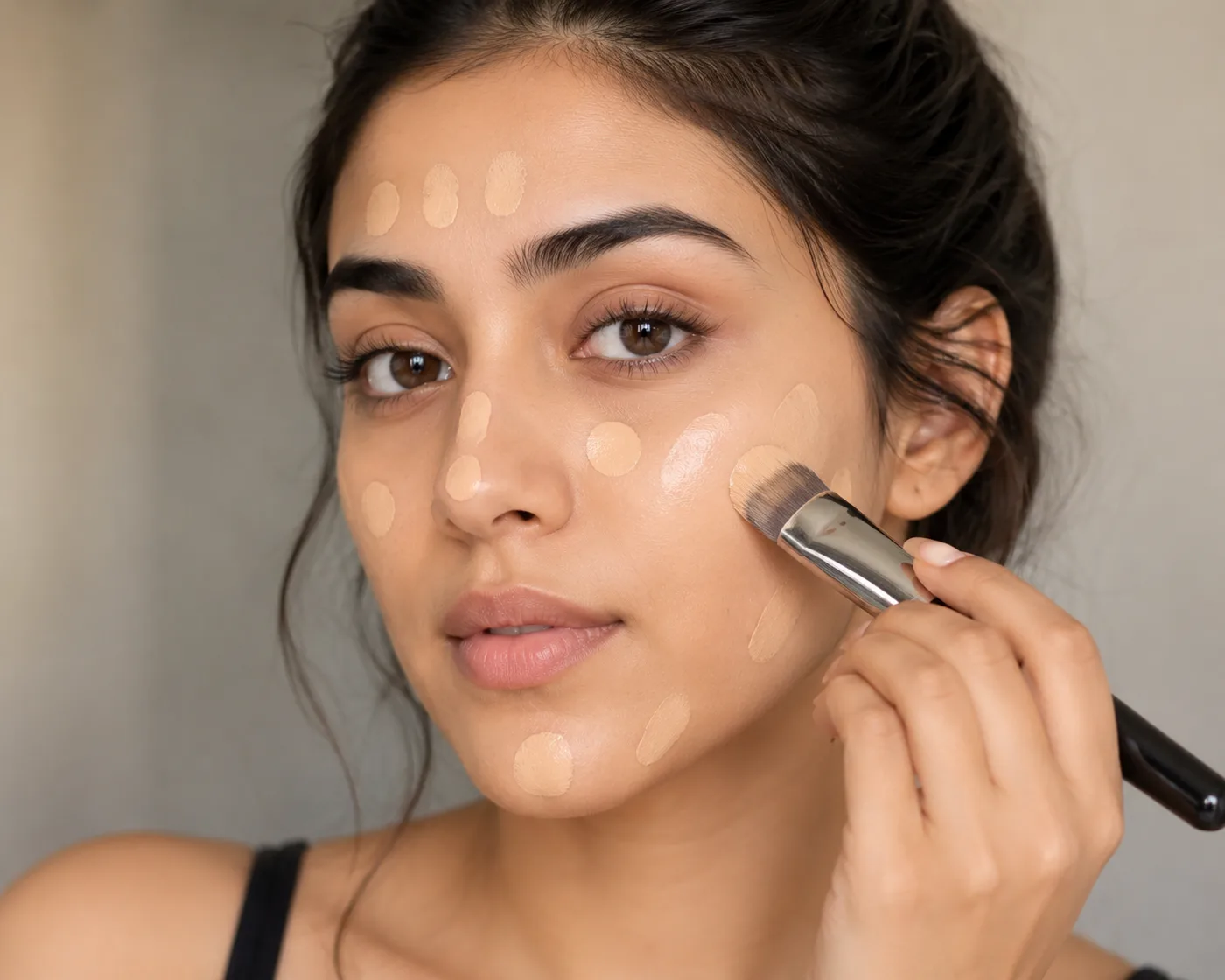
The fix
- let moisturizer or primer settle for a few minutes before applying foundation
- start with one pump or less and spread it from the center of the face outward
- use a brush for more coverage or a damp sponge to sheer and smooth the finish
- set only oily or crease-prone areas with a small amount of powder
If it’s still not right
- Press a damp sponge over heavy areas to lift excess foundation.
- Add concealer only where coverage is still needed instead of adding foundation everywhere.
Prevent it next time
- Match primer and foundation texture, such as water-based with water-based.
- Avoid full-face powder unless your whole face gets oily.
Notes
Why this works
Liquid foundation is easiest to control in thin layers. A heavy first layer leaves less room to correct texture, color, or dryness, and adding powder on top can make the whole face look thicker. Starting in the center keeps coverage where redness and uneven tone are usually strongest.
Tools change the finish. A brush lays down more product and gives quicker coverage, while a damp sponge absorbs and presses away excess. Setting only where makeup moves keeps the rest of the skin flexible and prevents the flat, powdery look that makes foundation read as makeup instead of skin.
Substitutions
- Instead offoundation brushclean fingers for sheer coverage
- Instead ofsetting powderblotting paper before a tiny amount of powder
Fixed it differently? Submit your version → — the best fixes get published with your name on them.