
The Beauty Answer · Dark Skin · ≈ 5 min fix
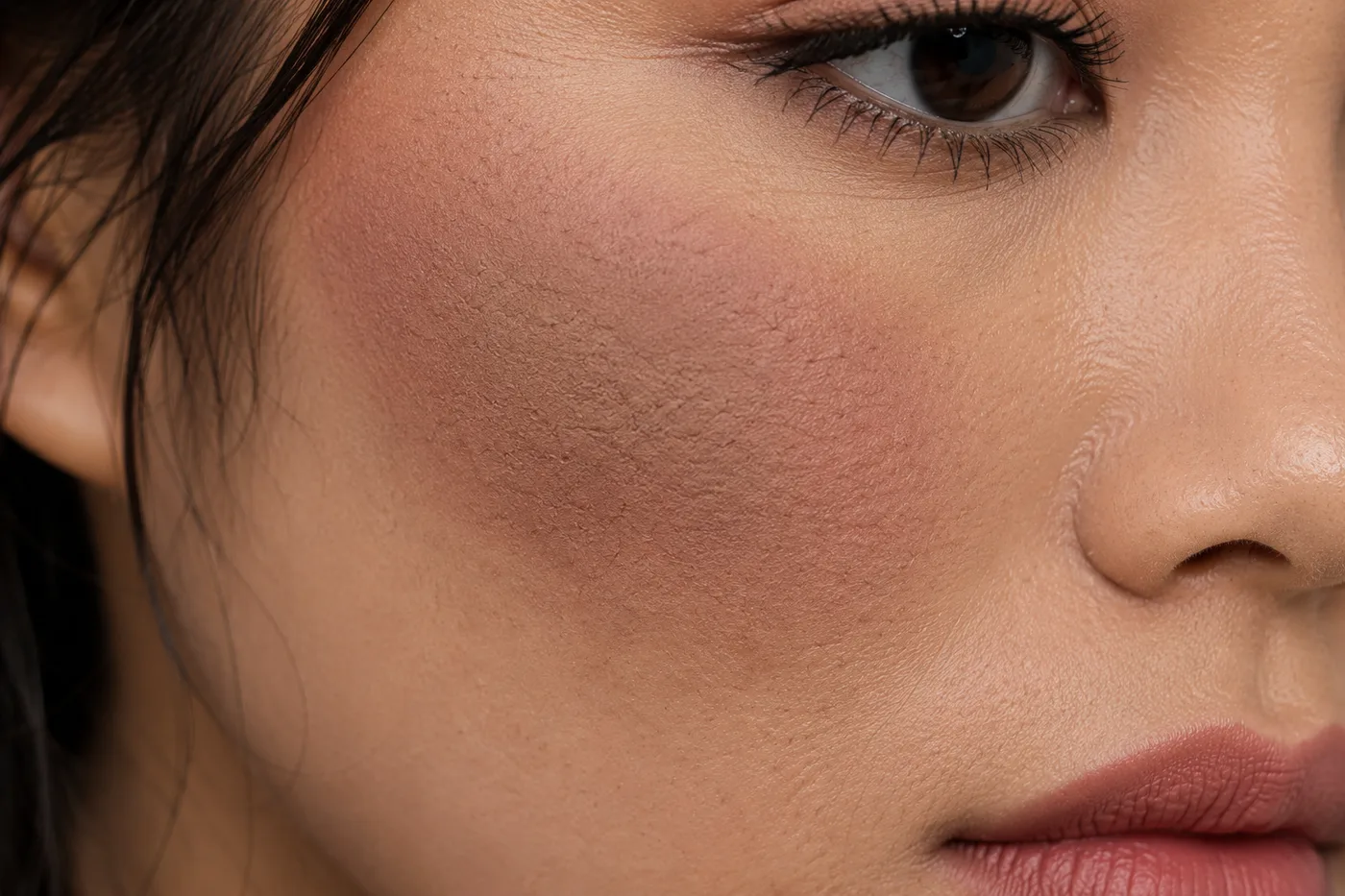
Blush Turns Muddy
Blush turns muddy when the undertone is too muted, the base isn't set, or bronzer and blush mix. Brighter placement and cleaner layers keep color fresh.
Part of dark skin beauty fixes and muddy beauty fixes .
The fix
- set any tacky foundation or concealer where blush will go
- wipe excess bronzer or contour from the brush before applying blush
- choose a blush with enough warmth, berry, coral, red, or plum to show on your skin depth
- place blush slightly higher on the cheek instead of blending it into contour
If it’s still not right
- Tap a brighter cream blush under powder blush for more color clarity.
- Skip contour directly under the blush if the two keep blending together.
Prevent it next time
- Use separate brushes for bronzer and blush.
- Test blush in daylight to see whether it reads fresh or gray.
Notes
Why this works
Blush needs color separation. When it mixes with contour, bronzer, or unset foundation, the final shade becomes less clear and can read muddy. That effect is stronger when the blush itself is muted or too light.
Setting the base and using a clean brush keeps the pigment truer. On deeper skin, richer undertones often look more natural than pale shades because they stay visible without turning gray.
Substitutions
- Instead ofcream blush or powder blushlipstick tapped lightly as cream blush
- Instead ofsetting powderblotting paper pressed over tacky base
Fixed it differently? Submit your version → — the best fixes get published with your name on them.