
The Beauty Answer · Hair · ≈ 45 min fix
How to Color Hair at Home
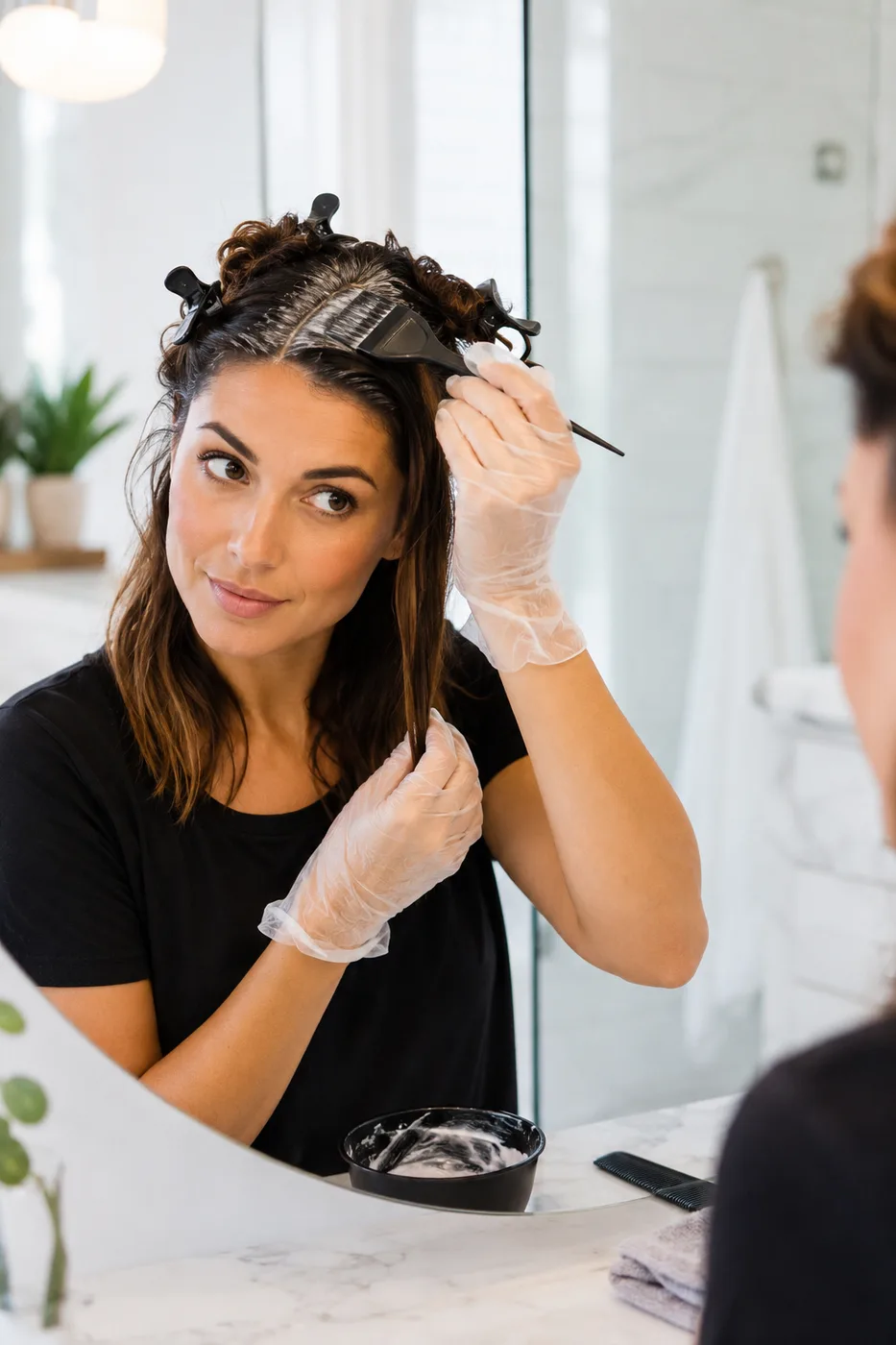
Coloring hair at home works best when you stay close to your current shade, protect the hairline, and focus on roots or gloss rather than a risky major color change.
Part of hair beauty fixes and uneven beauty fixes .
The fix
- choose a shade within one or two levels of your current color for the lowest-risk result
- apply petroleum jelly around the hairline and ears to prevent skin staining
- start where regrowth or grays are most visible, then pull color through the ends only if the instructions allow it
- rinse fully and condition well so the hair does not feel rough afterward
If it’s still not right
- Use a color-depositing gloss if the color is dull but the level is already right.
- See a colorist if the hair turned very dark, orange, or banded.
Prevent it next time
- Keep the box top or formula note so future root touch-ups match.
- Do a strand test before applying a new shade all over.
Notes
Why this works
Hair color is chemistry, and the safest home version is controlled maintenance. Roots and grays need more attention because they are new, untreated hair. Ends may already be porous from past color and can grab too dark if fresh dye sits on them for the full processing time.
Staying close to your current shade reduces the chance of obvious bands or warmth. A gloss can refresh tone and shine without the same commitment as permanent dye. Protecting the hairline and following timing closely keeps the cleanup easier and the result more even.
Substitutions
- Instead oftint brushgloved fingers for gloss-only formulas
- Instead ofpetroleum jellythick fragrance-free balm
Fixed it differently? Submit your version → — the best fixes get published with your name on them.