
The Beauty Answer · Dark Skin · ≈ 180 min fix
How to Do Knotless Braids at Home
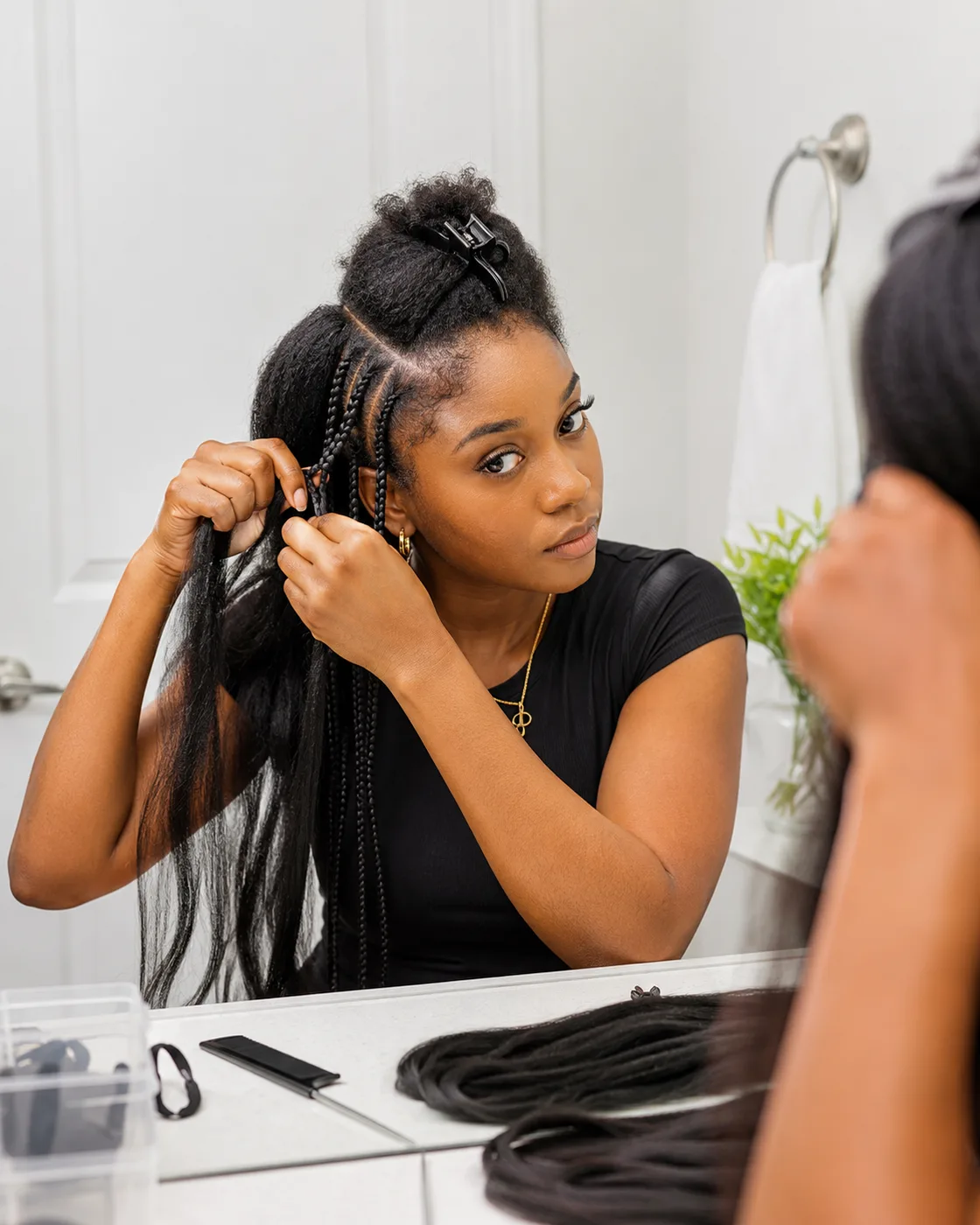
Knotless braids look smoother and feel lighter when sections are clean, extension hair is fed in gradually, and tension stays gentle around the edges.
Part of dark skin beauty fixes and related beauty fixes .
The fix
- wash, detangle, and stretch the hair before braiding so sections stay smooth
- part one clean section at a time and apply a small amount of braid gel at the roots
- start with your natural hair, then feed in small pieces of extension hair gradually
- keep tension gentle at the hairline and nape where hair is most fragile
If it’s still not right
- Redo any braid that hurts, pulls bumps into the scalp, or feels tight when you move your face.
- Make larger parts if the install is taking too long and tension is increasing.
Prevent it next time
- Keep edge sections slightly larger and looser.
- Moisturize the scalp lightly during wear instead of layering heavy oils.
Notes
Why this works
Knotless braids are about gradual tension. Because the braid begins with your own hair, the base lies flatter and feels lighter than a traditional knot. Feeding in small pieces lets you build fullness without putting one heavy anchor at the scalp.
The risk is over-tightening. A neat braid should not hurt, create bumps, or pull the hairline. Clean parts and a small amount of product make the style polished, but too much gel can create buildup before wash day. Comfort matters as much as neatness because protective styles should protect the hair, not stress it.
Substitutions
- Instead ofbraid gellight edge control used sparingly
- Instead ofpre-stretched braiding hairregular braiding hair feathered by hand
Fixed it differently? Submit your version → — the best fixes get published with your name on them.