
The Beauty Answer · Skincare · ≈ 10 min fix
How to Dermaplane at Home
Dermaplaning at home removes peach fuzz and surface flakes, but it needs clean skin, a fresh facial razor, and light pressure to avoid irritation.
Part of skincare beauty fixes and dull beauty fixes .
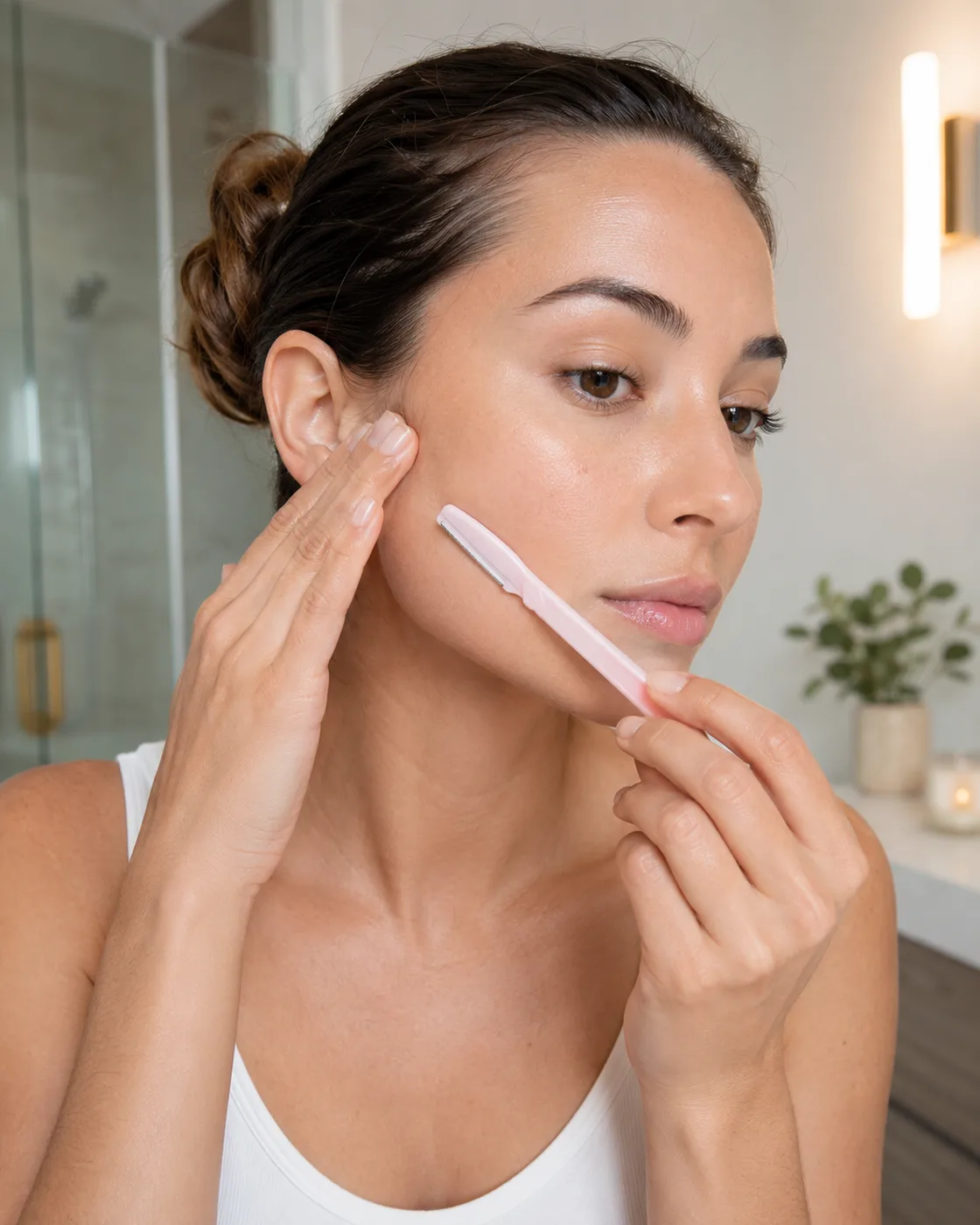
The fix
- cleanse and dry the skin fully before using the razor
- hold the skin taut and glide the facial razor downward with light, short strokes
- skip active acne, irritated patches, and any broken skin
- rinse, moisturize, and wear sunscreen because fresh skin is more sensitive
If it’s still not right
- Stop immediately if the skin stings, bleeds, or feels hot.
- Pause acids, retinoids, and scrubs for a day or two afterward if your skin is sensitive.
Prevent it next time
- Use a fresh or sanitized facial razor each time.
- Dermaplane no more than every few weeks unless your skin tolerates it well.
Notes
Why this works
Dermaplaning can make skin look smoother because it removes the fine hair and loose flakes that catch foundation. The benefit is immediate, but so is the risk if you press too hard or go over irritated skin.
Dry, clean skin lets the blade skim the surface instead of dragging through cleanser or oil. Short strokes give more control than long swipes. Moisturizer afterward helps the barrier settle, and sunscreen matters because freshly exfoliated skin is more vulnerable to irritation and uneven tone.
Substitutions
- Instead offacial razorprofessional dermaplaning appointment
- Instead ofmoisturizerbland barrier cream
Fixed it differently? Submit your version → — the best fixes get published with your name on them.